

Home Insurance Non-Renewal in Chula Vista or South Bay? Here's What to Do Before You Sell or Stay
Home Insurance Non-Renewal in Chula Vista or South Bay? Here's What to Do Before You Sell or Stay
What Should I Do If My Home Insurance Gets Non-Renewed in San Diego County?
First, don't panic — a non-renewal is common right now and it doesn't mean your home is unsellable or uninsurable. You have three real paths: shop for new coverage (including the California FAIR Plan), fix the issues your insurer flagged, or decide this is your sign to sell while your home is still in good shape. Most South Bay homeowners can solve this in a few weeks with the right help.
If you got a letter that starts with "we regret to inform you" from your insurance company, you're not alone. Insurers across California have been dropping policies and raising rates all through 2026, and San Diego County is not exempt. I've had homeowners in Eastlake and Otay Ranch call me holding a non-renewal notice, not sure if they should fight it, fix it, or just sell and move on. Let's walk through your real options.
Why South Bay Homeowners Are Getting These Letters
Insurance companies use wildfire risk models that look at your home's distance to open space, brush, and canyon land — not just your street address. That means a lot of South Bay properties are getting flagged that most people wouldn't think of as "fire zone" homes.
Here's what that looks like on the ground:
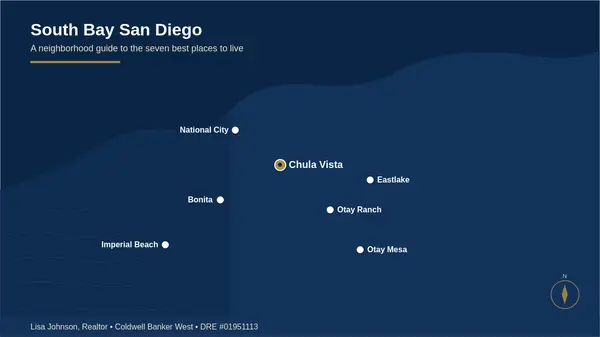
- Eastlake and Otay Ranch have plenty of single-family homes built right up against open space preserves and canyon slopes. Those lots are gorgeous — no back neighbors, nice views — but they're exactly the kind of parcel insurers are pulling back from.
- Bonita has larger lots and more mature landscaping than a lot of newer South Bay neighborhoods, and older trees and brush near a home can trigger the same red flags.
- Otay Mesa sits close to open, undeveloped land on its edges, which shows up the same way in an insurer's risk model.
- Chula Vista's older neighborhoods and National City don't usually carry wildfire risk in the same way, but homeowners there are still seeing rate increases tied to statewide reinsurance costs — everybody's paying more, even away from canyon lots.
- Imperial Beach homeowners are dealing with a different letter entirely: flood and coastal risk, not fire. If that's you, a lot of the advice below still applies, just swap "wildfire mitigation" for "flood mitigation" and talk to an agent who handles NFIP flood policies.
None of this means something is wrong with your home. It means the insurance market changed faster than most people's policies did.
Your Three Real Options: Fight It, Fix It, or Sell
Option 1: Shop for new coverage
A non-renewal from one company doesn't mean every company will say no. Get an independent insurance broker who works with several carriers — not just one big name — to shop your home around. Ask specifically about the California FAIR Plan, which exists as a backstop for homes standard insurers won't touch. It costs more than a regular policy, but it's often paired with a smaller "wrap" policy that covers what FAIR Plan leaves out, and together they can get you fully covered again.
Option 2: Fix what triggered the flag
If your notice mentions defensible space, roof material, vents, or nearby vegetation, you may be able to fix the actual problem. Clearing brush within a set distance of your home, replacing wood shake with a fire-rated roof, or screening vents with fine metal mesh are all things insurers reward. Some homeowners get reinstated with the same carrier once they document the fix. It costs money and time up front, but it can be cheaper than years of rising premiums — or it may buy you time to sell on your own schedule instead of a rushed one.
Option 3: Sell now, while your home shows well
Here's the option nobody wants to think about first, but it's worth putting on the table honestly: if the ongoing insurance cost and hassle just aren't worth it to you anymore, selling while your home is in good condition and the local market is steady can be the simplest fix of all. You skip the cycle of shopping renewals every year, and you walk away with your equity instead of spending it on premiums.
This isn't the right call for everyone. But if you were already thinking about downsizing, relocating, or moving somewhere with lower insurance costs, a non-renewal notice is often the push that finally makes the decision easy.
How Insurance Trouble Shows Up During an Actual Sale
This is the part a lot of general advice skips, and it's where a local agent actually earns their keep.
In California, a seller must complete a Transfer Disclosure Statement (TDS) and provide buyers with a Natural Hazard Disclosure (NHD) report. The NHD report tells a buyer whether your property sits in a state-designated fire hazard zone, flood zone, or other risk area — the same kind of information your insurer used to flag your policy. Buyers see this report early, so it's smart to know what it says about your home before you list, not after an offer comes in.
Insurance can also slow down or stall escrow itself. Your buyer's lender will require proof of insurable coverage before they'll fund the loan, and if a buyer struggles to get their own policy on your specific property, that can delay closing even after you've accepted an offer. A good escrow company (which handles the transaction paperwork and funds) and a separate title company (which handles the title work and title insurance) both play a role here, but neither one solves an insurance gap for your buyer — that's on the buyer's lender and insurance agent to sort out, ideally well before your closing date.
Knowing this ahead of time means you can price and market your home in a way that heads off surprises instead of reacting to them mid-escrow.
Is Selling the Right Move for You Right Now?
Ask yourself a few honest questions:
- Is this the first non-renewal you've had, or the second one in a few years?
- Are you willing to spend money now on brush clearance, a new roof, or vent screens — and do you plan to stay long enough to get that money back in savings?
- Were you already thinking about a change — downsizing, moving closer to family, or relocating for work or military orders — before this letter showed up?
- Would knowing your home's current market value change your answer?
If you read that last question and realized you don't actually know what your South Bay home is worth today, that's the easiest first step. A no-cost, no-pressure home valuation gives you a real number to weigh against the cost of fixing or fighting your insurance situation, so you're deciding with facts instead of a gut feeling under stress.
Frequently Asked Questions
No. A non-renewal is about your current insurance carrier's risk appetite, not your home's condition or its ability to sell. Buyers can still get their own coverage — sometimes with a different carrier or the California FAIR Plan — as part of their purchase.
California's disclosure rules focus on the property's condition and hazard status through the Transfer Disclosure Statement and Natural Hazard Disclosure report, not your personal insurance history. That said, if the non-renewal was tied to something physical about the home (like a hazardous roof or major fire risk factor), that condition itself may need to be disclosed. When in doubt, talk to your agent and a real estate attorney about your specific situation.
Not usually, especially in South Bay communities where a lot of homes carry the same designation because of nearby open space. Buyers in this market have generally learned to expect it and to shop for coverage accordingly, especially with an agent who can point them toward the right insurance resources.
Shopping for new coverage can happen in days to a couple of weeks. Physical fixes like brush clearance or vent screening can take longer depending on contractor availability, but many homeowners get reinstated within a season once the work is documented.
It depends on your timeline and goals. If you plan to stay 10+ years, fixing the issue and shopping for better coverage is often worth it. If you were already leaning toward a move, a non-renewal is often a reasonable reason to stop putting it off.
Not Sure Which Option Makes Sense? Let's Look at the Numbers Together
You don't have to figure this out alone, and you definitely don't have to make a big financial decision based on one stressful letter. If you're weighing whether to fix your insurance situation or sell your South Bay home while it's in great shape, get a free home valuation and let's talk through your real options with real numbers in front of us.
If you're on the buying side and wondering how insurance factors into your own purchase in San Diego County, our home buyer's guide walks through what to expect, including how the Natural Hazard Disclosure report affects your search. And if you're a service member or military family working through a PCS move, our military relocation resources cover VA loan timelines and how insurance questions fit into a PCS schedule.
Categories
Recent Posts



GET MORE INFORMATION